
When Trust is Broken: Grief, Power, Betrayal, and Accountability
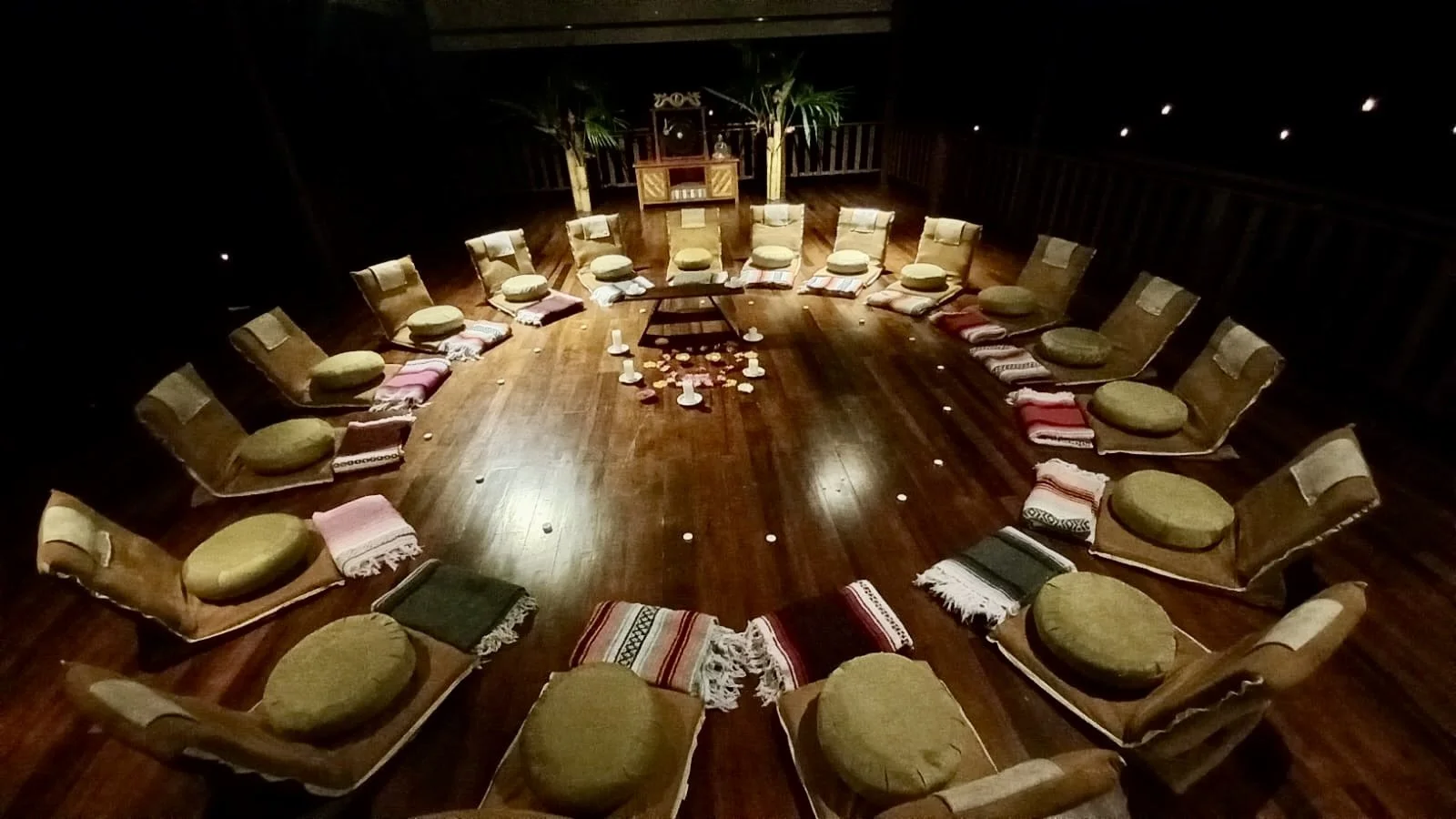
Last Sunday morning, while getting ready to leave for Waves of Grief, I got a text from a friend, who, with me, had studied with grief tenders and soul activists, Holly Truhlar and Francis Weller: “I just forwarded you something heartbreaking written by Holly.” I immediately feared Francis had died. It was worse.
The message led to a Substack essay by Holly, titled, “Accountability Beyond Banishment: Navigating Abuse of Power, Harm, and Betrayal.” In it, Holly describes sexual and relational misconduct involving women who were connected to Francis through professional and ritual settings, many years ago. She recounts two situations she says she has verified, discusses an accountability process related to one of them, and considers what these revelations mean for people who studied with Francis, collaborated with him, or brought his teachings into their own work. And in my case…into my way of seeing the world.
Holly was not an outside observer to me. She was my teacher alongside Francis during the nearly eighteen months I studied soul work, grief tending and ritual with them. I knew her as his close friend, teaching partner, and collaborator, and I trust her implicitly. I trust both her proximity to what occurred and the care with which she has represented what she knows. I encourage people who have been influenced by Francis to read Holly’s essay themselves. Although I trust her account, I was not present for the events she describes and cannot speak to them from my own firsthand knowledge. I had not heard any of this before Sunday.
Many people know Francis as the author of The Wild Edge of Sorrow, a book I have often referred to as my bible. I began studying with Francis and Holly in early 2023, beginning with the Soulful Living Community, where we met weekly for nearly a year. Francis devoted the first hour of each gathering to teaching from and presenting essays he was developing for his latest book, followed by writing invitations and reflection questions for breakout sessions and group discussion. Much of that material was later published in his 2025 collection, In the Absence of the Ordinary: Soul Work for Times of Uncertainty.
I continued studying with both Francis and Holly in a six-month Grief Ritual Leadership Training, where the curriculum addressed components of psychology, spirituality, ritual, group process and power dynamics, including hierarchy and the obligations that accompany authority. Those ideas became part of the foundation of my work. In developing our grief retreats, I’ve drawn extensively on Francis’ teachings and ritual practices, including communal grief work influenced by his years of study and collaboration with Malidoma Somé. These practices have roots in the ritual traditions of the Dagara people of Burkina Faso in West Africa, carried and taught in the West by Malidoma and Sobonfu Somé. I did not study directly with either of them; what I received came through Francis and adapted for Western settings. That influence has also been present at Waves of Grief, and in other spaces I have created for people living alongside deep loss. In all those spaces, I’ve made no mention of the harm that has been caused because I didn’t know. Now I do.
I have shared Francis’s words publicly many times. I have described qualities in him that I experienced as generous, thoughtful, and wise. It is understandable that people familiar with my work would connect it with his. I also need to acknowledge my own participation in placing Francis on a pedestal. His words helped me make meaning of grief, and because of that, I allowed the value of his teachings to shape my understanding of who he was. I blurred the distinction between being deeply moved by someone’s work and knowing the whole person.
The conduct Holly describes represents a grave misuse of authority. Relationships formed in teaching, mentorship, professional, and ritual contexts are not equal in the ordinary sense. Grief work can bring people into states of unusual trust and exposure. Anyone leading such work has a duty to recognize that imbalance and avoid turning another person’s openness into an opportunity for sexual or emotional gratification. The news is particularly difficult because Francis knows this—he teaches about leadership and the ethical use of power. Learning of behavior that appears so contrary to those principles has forced me to confront a painful contradiction from a person I have grown to respect and admire on many levels. My concern is centered on the women who experienced harm. At the same time, I am aware that this news affects many others: students, colleagues, participants, and communities that built meaningful work around Francis’s teachings.
Holly also connects these events to a broader history within the ritual world, including accounts of Malidoma Somé’s sexual relationships with students. Malidoma died before I began studying with Francis, but he and Francis had taught together for years, and teachings associated with Malidoma were part of the lineage we were being invited to receive and carry forward. Learning this has created another layer of betrayal for me. I do not know who on our teaching team knew what, or when, and I do not want to imply knowledge I cannot establish. But this history was not disclosed while we were being taught about power, hierarchy, and the ethical responsibilities of leadership. Had I known, I could have made a more informed choice about how I engaged. Its absence now feels significant and requires me to ask what was left unspoken, whose experiences were overlooked, and what harm I may have perpetuated without understanding the fuller context.
That Sunday morning, before leaving for Waves of Grief, I removed a quotation by Francis from my email signature and website: “The work of the mature person is to carry grief in one hand and gratitude in the other and to be stretched large by them.” This was not a final judgment about the quotation or a declaration that I had resolved how to relate to everything I learned from Francis. It was a small, immediate decision. I no longer felt comfortable presenting his words as part of my public voice without first acknowledging the information I had just received. I am trying to understand how to separate what has been useful from the person who taught it, without pretending that the separation is simple. The practices I learned have mattered to me. They’ve also mattered to people who participated in spaces I facilitate. Learning about this harm does not erase what participants experienced or what the work awakened in me. Both the value people found in the work and the damage connected to its teachers must be held in view.
I’m not sure I have a complete conclusion. I do believe that accountability involves more than private regret or public statements. It requires accurate naming of what happened, openness about the process of responding, concrete changes in conduct and structure, efforts toward repair when those are possible and wanted, and a readiness to step away from authority when remaining in that role creates further risk. The responsibility for that accountability doesn’t belong to the women who experienced harm. They aren’t responsible for facilitating anyone else’s understanding, healing, or transformation. I hope Francis will meet this moment with honesty, accept the consequences of his choices, and participate in whatever repair remains necessary or possible, without expecting anything from the women involved.
This whole thing touches something even closer to home. I’ve experienced how harm between friends and colleagues can reverberate through an entire community, complicating relationships and raising difficult questions about loyalty, truth, compassion, and accountability. The circumstances are different, and I am not telling that story here. I mention it because the experience taught me that caring about someone’s humanity doesn’t require us to minimize the harm they have caused or make their behavior acceptable by being complicit. Recognizing someone’s complexity or acknowledging their gifts cannot become a way of softening the reality of the harm. At the same time, holding someone accountable doesn’t require us to deny their humanity or pretend that nothing they offered held value.
I’m grateful to Holly for bringing this information forward, and for addressing its implications with care. My thoughts are with the women involved, and with everyone now trying to understand what this means for their own work, relationships and communities. I’m still in the middle of this process. My perspective may change as I learn more, but for now I am writing because, well, it’s how I process. But also, people who have trusted me to hold vulnerable spaces with them deserve to know where I stand. I trust people to gather their own information and decide what feels right for them.